A century of coal: 2,234 US mining deaths in 1926, eight in 2025
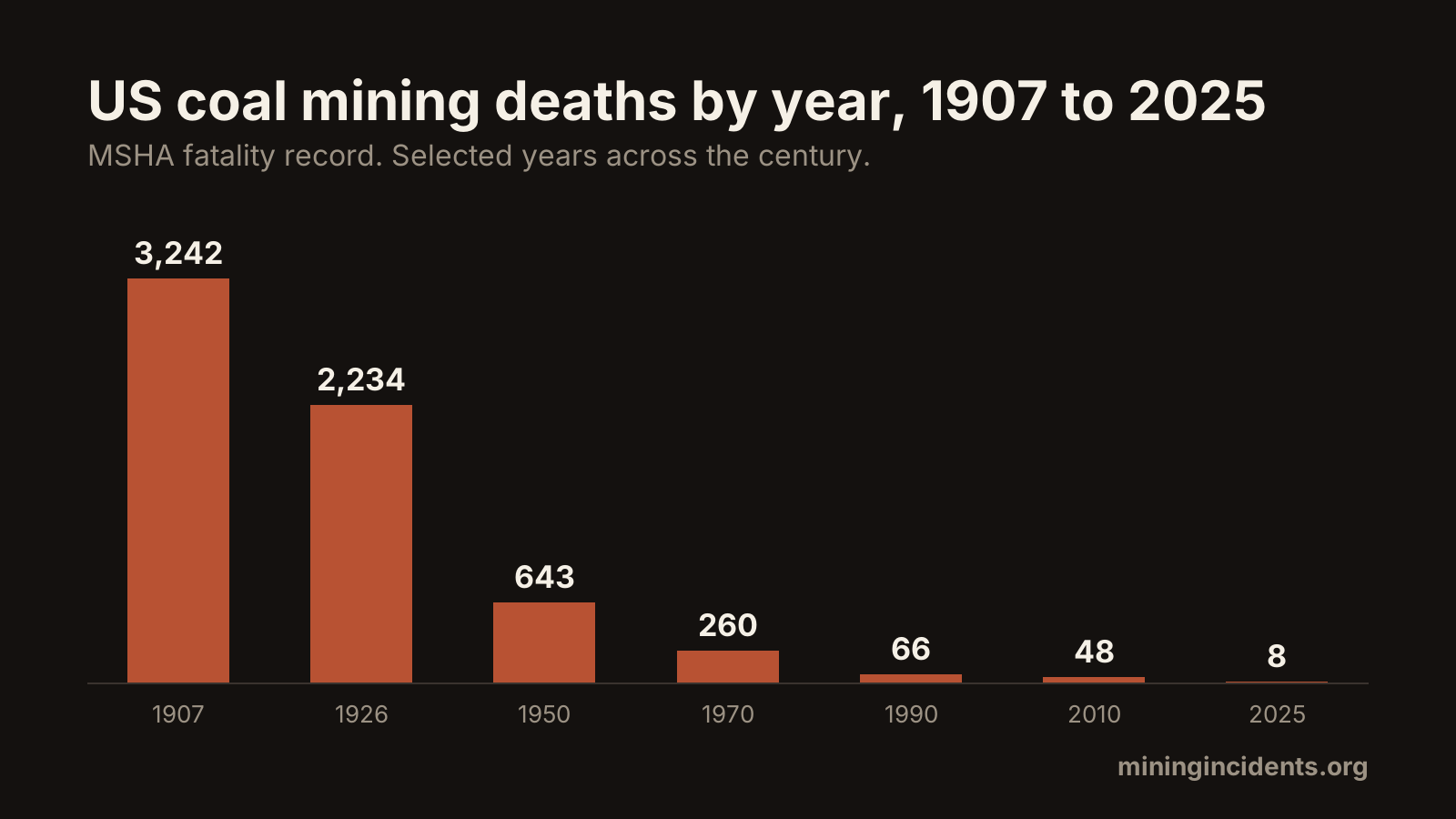
A century ago, coal mining was one of the deadliest jobs in the United States. In 1926, US coal mines killed 2,234 workers, according to MSHA's fatality record that runs back to 1900: www.msha.gov/coal-fatalities. In 2025, the same record counts eight coal-mining deaths. Our index, which tracks every US mining fatality since 1983, counts the same eight for last year.
The raw drop is roughly 279 to 1. That comparison flatters the present, because the coal workforce also collapsed over the century, from about 759,000 miners in 1926 to about 62,000 in 2025. The honest measure is the rate. In 1926, coal mining killed about 2.9 workers for every 1,000 employed. In 2025 the figure was about 0.13 per 1,000. Per worker, the job is roughly 23 times safer than it was a century ago. The absolute count fell faster still because there are so many fewer miners now.
The worst year came earlier. 1907 was the deadliest in US coal history, with 3,242 deaths, including 362 in a single explosion at Monongah, West Virginia, that December. The annual toll stayed above 2,000 through the 1910s and 1920s, then fell in step with federal law: the 1969 Coal Mine Health and Safety Act, the 1977 Mine Act that created MSHA, and the decades of enforcement that followed.
That enforcement record is what we index. Every coal death in the modern series sits beside the mine that reported it, its citation history, and its inspection record. The century-old counts come from MSHA's published tables. The last four decades come from the same federal data, read mine by mine: miningincidents.org